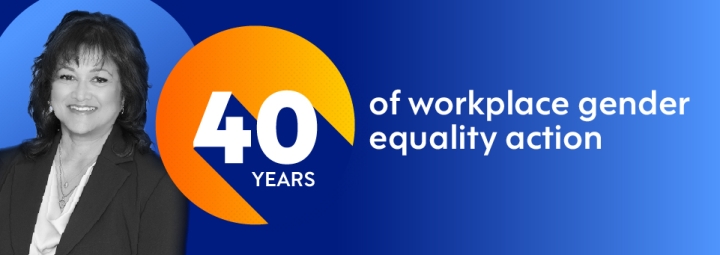
40 years of progress. Shaping the future of work together
Anniversaries are an opportunity to take stock – not just of how far we have come but of what the next period of progress will require.
This week is WGEA’s anniversary. The Affirmative Action (Equal Opportunity for Women) Act which established our predecessor the Affirmative Action Agency was passed 40 years ago.
Forty years ago, Australia embraced an important idea: employers have a role to play in creating opportunity for both women and men. Gender equality was not simply something for individuals to navigate. Organisations could make a difference by identifying barriers and taking action to remove them.
Her Excellency the Honourable Sam Mostyn AC, Governor-General of Australia hosted an anniversary event, including a panel discussion, at Government House attended by leaders from government, business and the gender equality community.
The panel reflected how far the conversation has evolved from asking how women can better ‘fit’ workplaces to asking a different question: how does work itself need to change? The challenge now is to design work and workplaces around the realities of modern life, enabling everyone to participate, contribute and succeed.
This challenge requires action across sectors, industries and workplaces. Increasingly, organisations are asking practical questions about how work can be organised differently – what the work actually requires, where unnecessary barriers exist and how jobs can be designed to attract and retain the widest possible pool of talent. What has encouraged me in conversations with employers, industry and employee groups and stakeholders is the focus on evidence to guide action, sharing what works and making progress together.
The imperative transcends gender equality. Australia has invested enormously in the skills, education and potential of its people. At the same time, we face ongoing skills shortages, demographic change and persistent productivity challenges. In this context, we cannot afford to leave talent on the sidelines or lose it unnecessarily from our workplaces. The question is no longer simply whether women are participating in the workforce. It is whether we are making the most of Australia's talent.
If we want a productive economy and thriving organisations, we need workplaces that attract, develop and retain talent. When work is designed well, workforce participation grows, organisations gain access to a broader talent pool and employees can better combine work and care responsibilities. Creating better workplaces is not only fairer. It is smarter.
As we reflect on the achievements of the past 4 decades, our focus must remain firmly on the future. We know change is possible. Our task now is to be ambitious about redesigning work so that it unlocks talent, strengthens productivity and expands opportunity for everyone.
Perhaps the most important question for the next 40 years is this: what is the idea that seems ambitious today, but in another 40 years will leave us wondering why it ever seemed so difficult?
Together, we can help shape the future of work for the generations that follow.