Publications

Find our research and publications to learn more about workplace gender equality. 

WGEA publications
Decorative tile - hands around a table, text reads "Collecting employee diversity information"

WGEA’s guidance on collecting diversity data helps you gather information safely and respectfully, giving you the evidence you need to drive real change.  
Decorative yellow graphic showing people standing on lines, with words Australia's Gender Equality Scorecard

See the key findings from the latest reporting period in gender segregation, pay gaps, women in leadership and more.
Close up image of 2 sets of hands, one working a calculator and the other with receipts. Text reads WGEA Ages and Wages Report

Understand how the gender pay gap impacts women and men at different ages, and how employer interventions at critical times can reduce the gap and improve the ability of women to earn and save for retirement.
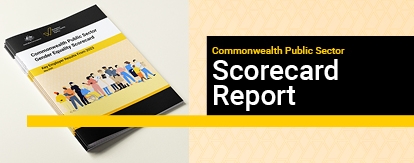
An image of the yellow, black and white Scorecard report cover on the left of frame, and on the right the words: Commonwealth Public Sector Scorecard Report. The Scorecard report has a colourful graphic of a diverse group of people standing together in the centre of the front cover.

Read WGEA's latest Commonwealth Public Sector Gender Equality Scorecard.
Background image is a silhouette of a man and child standing on a beach, looking out across the water. There are formations of sand in the immediate foreground. Small text in black reads "Your child's first hero is you." Followed by larger white text underneath which reads: "Take the leave and make a difference."

Parental leave for men

WGEA's review of the evidence and research reveals 7 key actions employers can take to ensure all parents have fair and equal access to parental leave.
A graphic showing an aerial view of a desk cluttered with reports, surrounded by people working, but you can only see their arms. There are some red transparent graphs layered over the image

WGEA has published the 2023-24 employer gender pay gaps of 7,800 private sector employers and 1,700 corporate groups.
Employer Gender Pay Gaps Snapshot download

WGEA’s latest analysis compares employer gender pay gaps by industry, industry-type, business size and the role of women in leadership. 

Employer gender pay gap publication UK review Download now

 This new research paper summarises the effects of the legislative requirement to publish employer gender pay gaps in the UK. 
Commonwealth Public Sector Snapshot Voluntary Reporting Results

The 2022 Commonwealth Public Sector Gender Equality Snapshot is the first look at WGEA reporting of gender equality in the public sector.
WGEA Progress Report

Find out how Australia progressed in relation to the gender equality indicators during 2020-2022.
Part-time managers: A review of the literature - November 2023

A lack of part-time manager roles for women can also stem from a significant gender pay gap at manager levels. Read the full literature review.

Joint publications

Four women sitting around a desk, smiling and laughing. White text reads Gender equity insights 2025

Access and download all nine reports in the BCEC | WGEA Gender Equity Insights series. The 2024 report explores the state of part-time employment and flexible working arrangements in Australia.
Decorative tile, text reads Target Setting for Gender Equality

Dr Leonora Risse's research paper Target Setting for Gender Equality: A Review of the Literature summarises the evidence behind setting targets for improving workplace gender equality. 
She's Price(d)less Report download now

Progress on closing the gender gap in Australia has stalled.

Fact Sheets

men and women standing on piles of coins

What is the gender pay gap? How do you calculate it? And how big is it really?

Person viewing data

WGEA will expand the publication of employer gender pay gaps to include new information. Find out the details here. 

WGEA Submissions

Submission to the ASX Corporate Governance Council - May 2024

In May 2024, the Workplace Gender Equality Agency (WGEA) presented a submission to the ASX Corporate Governance Council.

Diverse group of people

Download WGEA's latest parliamentary submissions.

Health crises can exacerbate existing gender inequalities. As the global health pandemic caused by COVID-19 is ongoing, the impacts and effects are still being assessed and understood. However, preliminary research and emerging data show that women are likely to be affected in particular ways by this global pandemic.

Women face greater risk of economic insecurity in retirement than men. To be economically secure in retirement means to be financially secure through a steady income and/or other resources to support a decent standard of living in the foreseeable future.

KPMG has developed this report, She’s Price(d)less: The economics of the gender pay gap, for Diversity Council Australia and the Workplace Gender Equality Agency. The report uses structured econometric modelling to determine the factors that underpin the gap, and to what extent they contribute to the issue.

Gender bias is pervasive at work and in organisations, creating inequalities at every stage of the employment cycle. This insight paper highlights some of the research examining how gender bias operates at work and provides evidence-based suggestions for creating more equitable recruitment and promotion systems.

This fact sheet looks at the features of ‘female-dominated’ and ‘male-dominated’ organisations, while highlighting the unequal distribution of women and men across industries and occupations.

The Business Council of Australia, McKinsey & Company and the Workplace Gender Equality Agency teamed up to undertake a study using three years of WGEA data and more than 40 interviews. The result, Women in Leadership: Lessons from Australian companies leading the way, provides an evidence-based recipe for dismantling barriers to women’s participation at senior levels and a correlation between representation of women in senior roles and the practice of normalising flexible work.

This paper explores how workplace negotiation contributes to gender inequality and what organisations and individuals can do to improve outcomes.